How They Pulled It Off: A One-Bedroom Penthouse That Transforms Into a Four-Bedroom Apartment
Welcome to How They Pulled It Off, where we take a close look at one particularly challenging aspect of a home design and get the nitty-gritty details about how it became a reality.
Shuji Suzumori of New York–based practice Suzumori Architecture understands that hosting friends and relatives can be complicated, especially when you live in a small space. “Each household may arrive or depart on its own schedule, carry different daily rhythms, and bring unique expectations of privacy and togetherness,” he says.
He also understands that certain design elements can make homes feel bigger or smaller—and that a good design might allow these elements to appear when privacy is needed and disappear when spaces are shared.
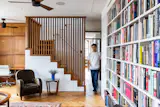
This space transforms into a private room with just a few clever tricks.
When Suzumori began working with a New York City couple who wanted their home to be the natural gathering location for family, friends, and holidays, he used transformable design to create a space that could feel either cozy or expansive depending on which elements were in play.
“We reimagined the space as a modular penthouse where areas, rather than rooms, can be sectioned off in various configurations,” Suzumori says. “This allows the couple to live comfortably as two most of the time, yet easily open their home to children, grandchildren, and guests of any size without compromising their own sense of calm and intimacy.”
The 2,400-square-foot penthouse duplex includes:
- A pocket door and pullout bench that quickly turns a breakfast nook into a private sleeping area
-
A louvered staircase that elegantly creates another private room, furnished with a Murphy bed
-
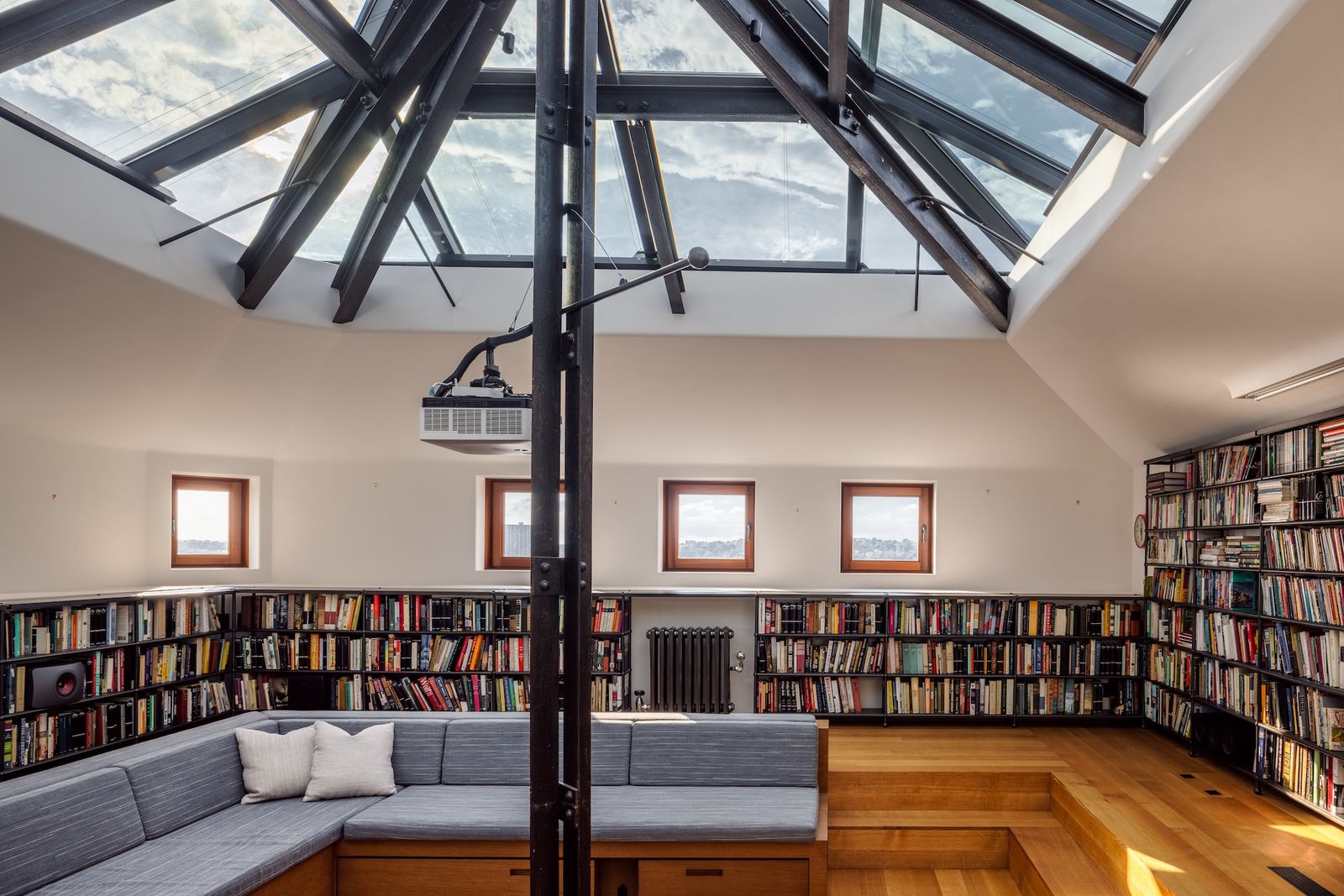
A library that transforms into a guest suite, turning a conversation pit into a sleeping platform and revealing a hidden shower stall
“Most of the time, [the library] is a serene reading room with a skylight that channels daylight deep into the lower floors,” Suzumori says. “Yet it can transform seamlessly into a guest suite with a full bath, minibar, and direct access to the shared roof deck, which works perfectly for visiting family or a temporary workspace.”
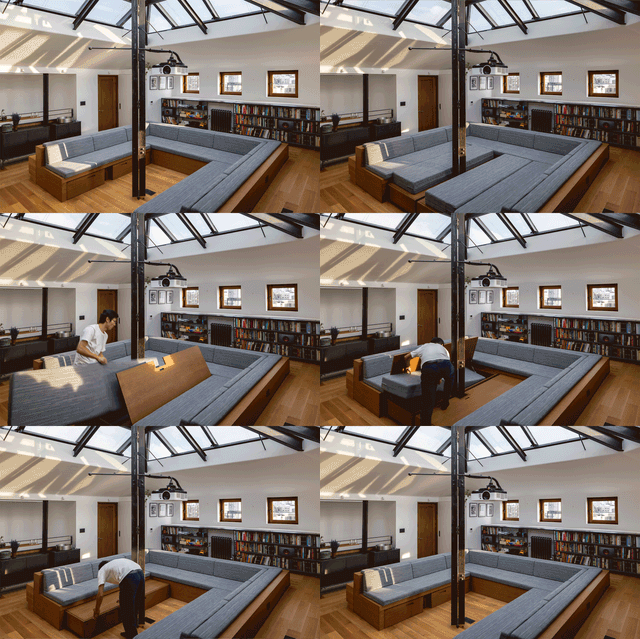
With a few short steps, the conversation pit in the library upstairs becomes space for family to sleep.
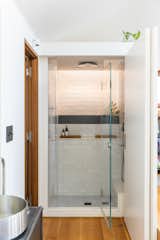
The library upstairs also includes a full bathroom, essentially transforming the upper level to a private space.
Tim Moss of New York City–based general contractor and construction management firm Think Construction had not worked with Suzumori prior to this project, but he was eager to take on the challenge. “One of our specialties is figuring out how to execute an architectural vision,” he says. “It’s a collaborative, iterative process with the architect and the owner.”
How they pulled it off: Transforming a penthouse into a modular home
- Natural elements and intuitive hardware: The team specifically chose materials that would reflect the building’s prewar history. “We focused on natural, enduring elements that would gain character and depth as they aged,” Suzumori says. Wood was a major feature, including solid white oak floors (treated with penetrating oil, which provides a more natural look), as were solid brass hardware and exposed steel. While much of the hardware is recessed and concealed, the team intentionally made modular elements such as door pulls and latches both visible and intuitive, allowing guests the ability to rearrange their space without stress or confusion. “The desk integrated into the Murphy bed clearly folds up to become part of the bed, and the pull on the sliding door indicates which pane is the leading, operable panel,” he says.
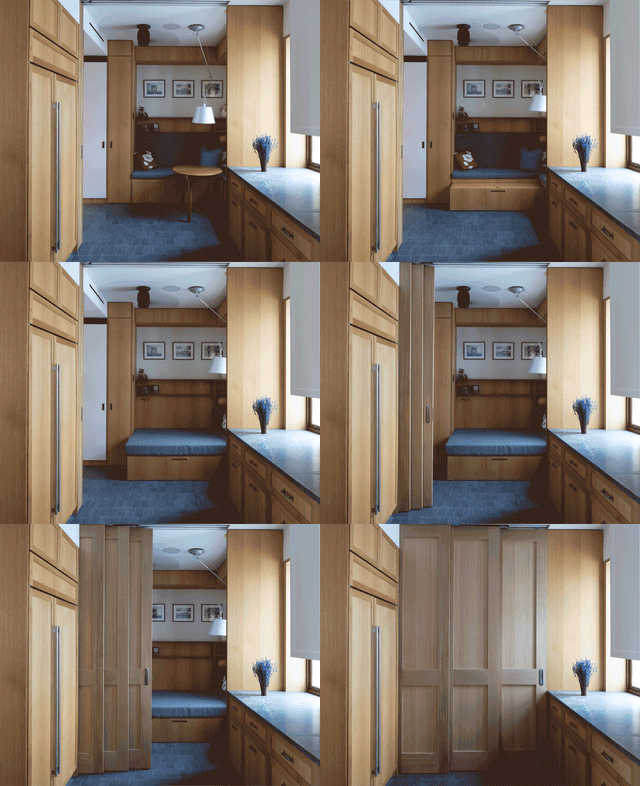
A breakfast nook transforms into a private sleeping space.
-
Japanese influence: The staircase was originally a utility structure made of steel. After Suzumori decided to use Japanese-inspired louvers to create a space that could feel either private or shared, depending on the orientation, Moss worked with the millworker to develop the hidden tracks and sourced the material with the necessary stability to make the design a reality. “We used rift-cut white oak,” he says, “which we stained to match the other woodwork.” In addition to the louvers used in the staircase, the home features other Japanese-influenced details, such as Japanese plaster walls.
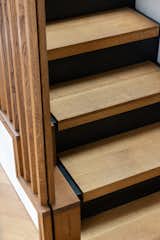
The hidden tracks blend seamlessly into the design of the stairs and allow for the louvers to close.
-
A focus on light and air: We care deeply about creating spaces that breathe well and are filled with light,” Suzumori says, “qualities that we believe define good architecture regardless of circumstance.” The penthouse was already built to provide cross-ventilation and light from multiple directions, and the team enhanced these features with aluminum-clad, double-hung wood windows that elevate the space while increasing its energy efficiency. Light and air also factored into the decision to use louvers on the staircase. When the two layers of tapered louvers are aligned, for example, the gaps between them allow light to enter the shared living space. When the louvers are offset, they become a functional wall that transforms the space into a private room.
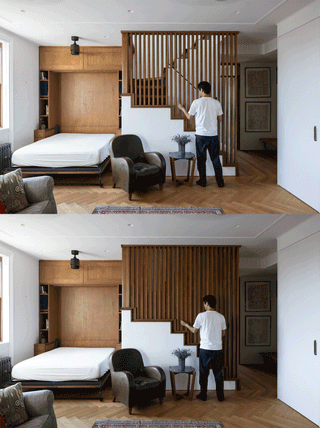
On the left, a workspace turns into a sleeping space when the Murphy bed is engaged and the stairs can be easily hidden from sight.
Both Moss and Suzumori confirmed that the homeowners were very pleased with their living space and its possibilities, and were regularly putting their home’s transformable features to use.
“We received a very happy message from the owners shortly after they moved in, and again after their first Thanksgiving gathering,” Suzumori says. “It seems the space has functioned exactly as intended. The flexibility of the modular design is used regularly to accommodate children and grandchildren, and during holiday gatherings, all the different configurations have been put into play!”
Project Credits:
link