


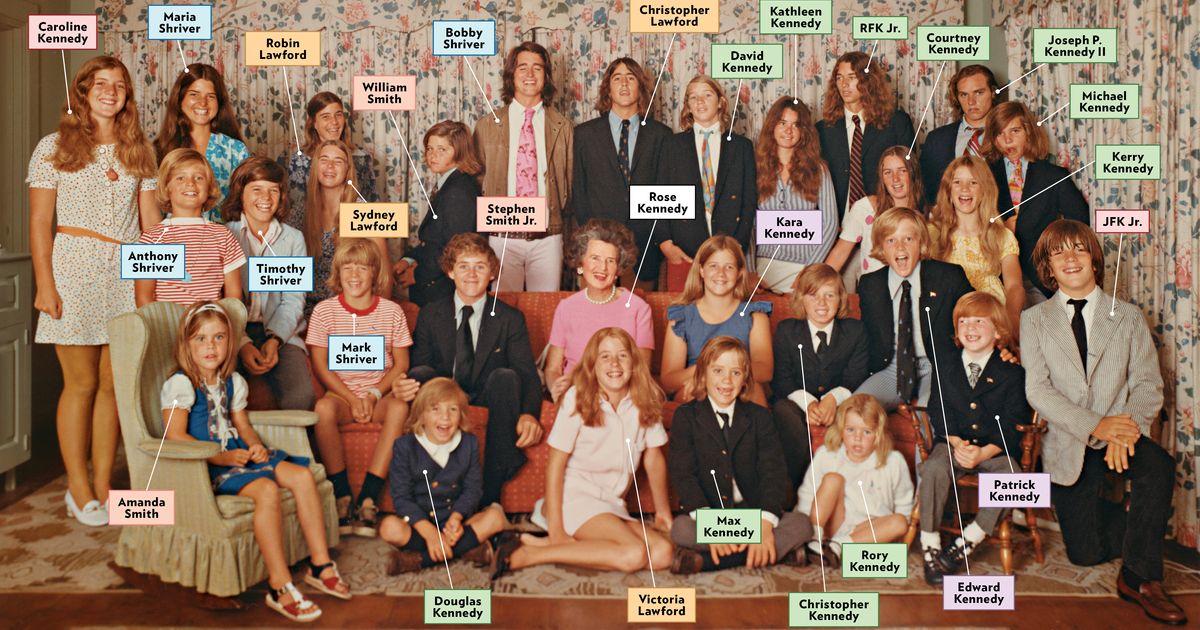

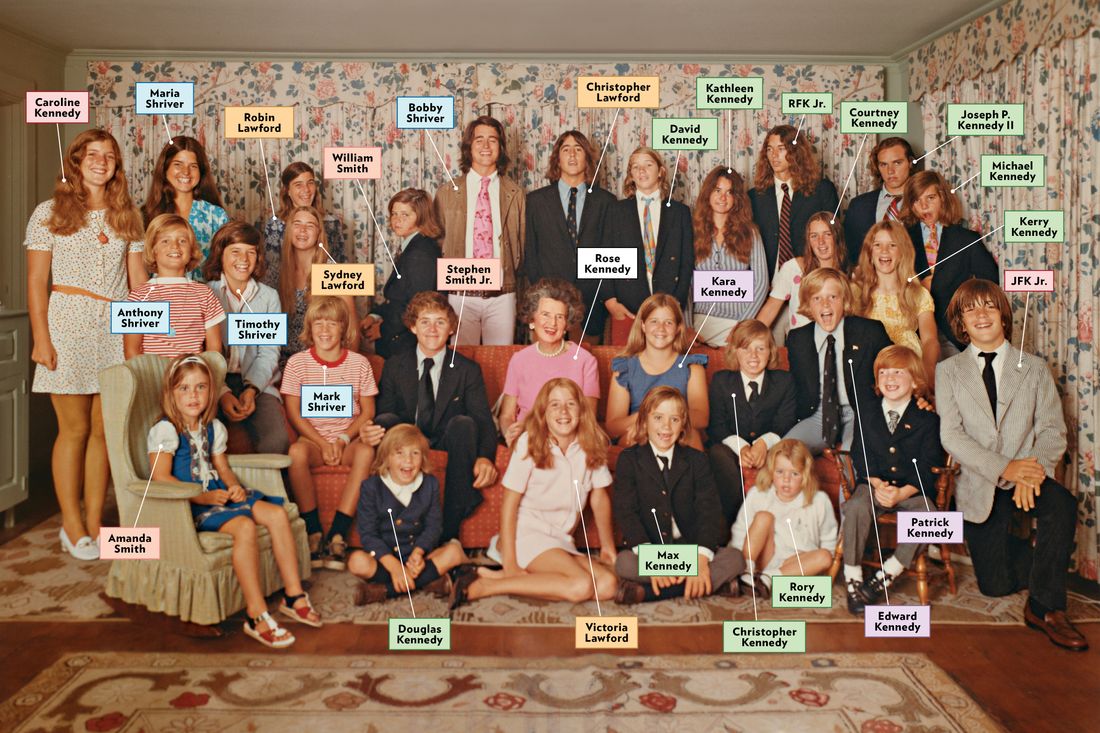
Photo: Kennedy Family Collection/John F. Kennedy Library and Museum
This article was featured in One Great Story, New York’s reading recommendation newsletter. Sign up here to get it nightly.
Ethel Kennedy’s death in October at 96 was the end of a trying few years. Her health had been in decline, and she had confined herself to living full time in Hyannis, the longtime family compound on Cape Cod. In the summer of 2024, her immune system was so compromised that she couldn’t attend the wedding of her granddaughter Mariah Kennedy Cuomo, even though it was being held at her home. “Normally, Ethel would be a part of everything,” one attendee said. “But all she could do was sit on this enclosed balcony and wave at people.”
Ethel’s son Bobby was there, too, although many of the other wedding guests weren’t in a mood to talk to him. Ethel’s relationship with her third child, named for her beloved husband, had always been tempestuous. When Bobby was a young man, she regularly threw him out of the house for drug use and other chaotic behavior; when he was 13, a coatimundi he kept as a pet attacked Ethel and sent her into premature labor with his brother Douglas. In high school, after Ethel excoriated him for getting arrested for marijuana possession in Hyannis, he packed up and drove west without telling anyone in his family where he was going, eventually selling his car and hopping freight trains. Bobby seemed to relish the chance to break away from his family and ride the rails with the other vagabonds. “I could be one of them,” he said later. “And not be a Kennedy.”

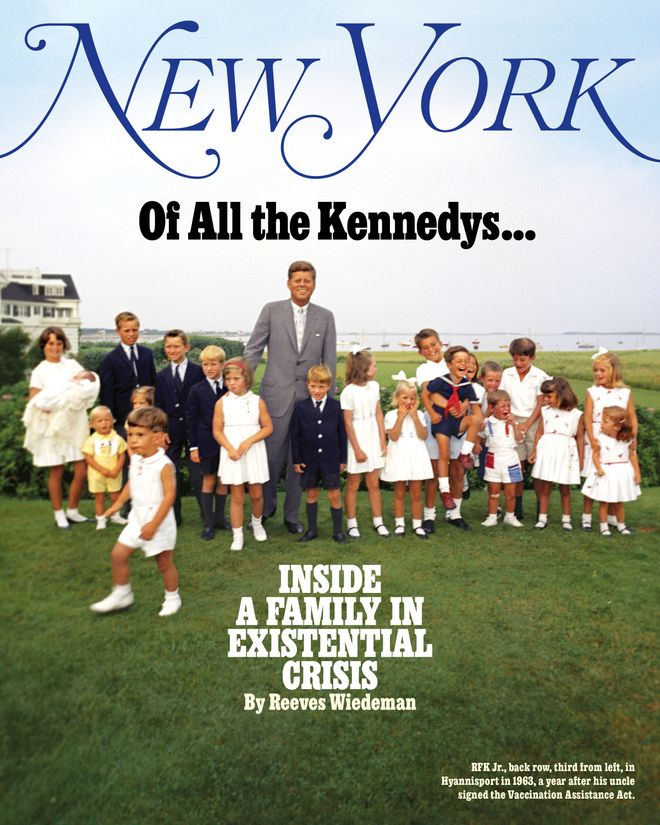
See All
Bobby and Ethel eventually made amends. He got sober, and Ethel became a booster of his environmental work. Bobby similarly came to appreciate his mother, writing in his 2018 memoir, American Values: Lessons I Learned From My Family, that her “sharp rebukes no longer trouble me.” That comment goes some way to explaining why Bobby was undaunted by any reservations Ethel had to his plans, announced in the spring of 2023, to challenge Joe Biden for the Democratic presidential nomination.
Ethel never spoke publicly about her son’s campaign, but everyone saw the effect it had. “The one who was brokenhearted — and the family won’t talk about it, but I saw it up close — was Ethel,” a longtime family friend said. She had devoted her life to supporting the Democratic Party, which RFK Jr. was now undermining with his insurgent, conspiracy-riddled, anti-government candidacy. Just a week before Bobby announced his run, President Biden, who had been close to the Kennedys for decades and kept a bust of Ethel’s husband, Robert F. Kennedy Sr., in the Oval Office, had called Ethel from Air Force One to wish her a happy 95th birthday, as he did every year, while flying to Belfast with her grandson Joe Kennedy III, who was serving as his special envoy to Northern Ireland. When Bobby made his candidacy public, Ethel called Biden to apologize for her wayward son. “You don’t have to,” Biden said. “I know about these things.”
Ethel’s funeral, just three weeks before the November election, had an awkward undercurrent. Bobby had recently dropped out of the race and decided to endorse Donald Trump; when he and his wife, the actress Cheryl Hines, walked into a wake the night before at his brother Max’s house in Hyannis, some of his relatives couldn’t help but feel uncomfortable. He was their brother, but he was also working for the enemy. Much of the crowd avoided Bobby, and he didn’t attend a party that night at his brother Chris’s home down the road. Bobby had told his family he wanted to speak at his mother’s funeral, but most of his eight siblings were aghast at his endorsement of Trump and weren’t eager to give him the microphone at the service on Cape Cod or the memorial planned for two days later in Washington, D.C. But Bobby insisted, and his siblings agreed to give him the floor in Massachusetts.
As Bobby spoke inside Our Lady of Victory Parish, several people sitting in the pews told me they were pleasantly surprised by what they heard. There was no talk of vaccines, no attempt to justify his family betrayal. “It was the old Bobby speaking,” a longtime family friend told me. But Bobby also had not quite learned when to give up the spotlight, and his speech meandered for so long that eventually the priest felt the need to cut him off. “He’s only gotten up to some anecdote about Muhammad Ali and Ethel and the anti-apartheid movement, and the priest gets up and says, ‘Thank you, Bobby,’” one attendee said. At a reception afterward at the Hyannisport Club, a friend found Bobby alone with Hines in a side room stewing about the interruption.
But there was more than Bobby’s hurt feelings to navigate. Ethel was the last surviving member of her generation of Kennedys from the 1960s, and her death was a reminder of the end of the American century. At the memorial in Washington, three presidents spoke; Sting and Stevie Wonder and Kenny Chesney performed; and Martin Luther King III, another American scion, remarked that he had lost count of how many Kennedys he had worked with in the decades since his father and JFK and RFK were killed in the space of five turbulent years. After the memorial, Ethel was buried next to her husband at Arlington National Cemetery.
The Kennedys remain a persistent source of fascination: CNN is airing a three-part documentary about John F. Kennedy Jr., and Ryan Murphy is filming a fictionalized version of his life on the streets of New York that’s expected in February. But all of that history was in the past, and the aura of wealth, power, and glamour that continues to adhere to the Kennedys has lagged behind the reality of a family much diminished in every category. After John F. Kennedy won election to Congress in 1946, there was at least one Kennedy — and often several — in federal office for the next 65 years; today, there isn’t a single Kennedy in any elected position of any kind and at any level. It’s been decades since JFK’s and RFK’s assassinations, long enough that roughly 80 percent of Americans have no living memory of what they did or stood for.
The family’s place in American politics had been in a natural state of decline for years, and the Kennedys seemed destined to fade into history like the Roosevelts and the Adamses before them — until Bobby hijacked his family name and made the Kennedys newly relevant in ways that mortified pretty much all of them. After becoming America’s leading vaccine skeptic and working to elect Trump, Bobby was appointed to lead the Department of Health and Human Services, where he has halted hundreds of millions of dollars in funding for vaccine and cancer research, overseen the worst measles outbreak in decades, eliminated jobs for tens of thousands of public-health officials, and supported the GOP’s legislative efforts to gut Medicaid. And he may just be getting started: While he has publicly denied it, Bobby now appears to be feeling out the possibility of a run for president in 2028.
Since Bobby’s rise, the rest of his family has displayed a mix of atomization and passivity, along with the occasional outburst of righteous resistance, that resembles liberalism’s broader, muddled response to the second Trump term and its near-daily assaults on values and institutions that once defined American life — values and institutions supported, for all the family’s well-documented flaws and hypocrisies, by the Kennedys. The family has always stood for more than itself, and in its inability to contain the damage to its legacy as it transforms into something vulgarized and deformed, it still does.

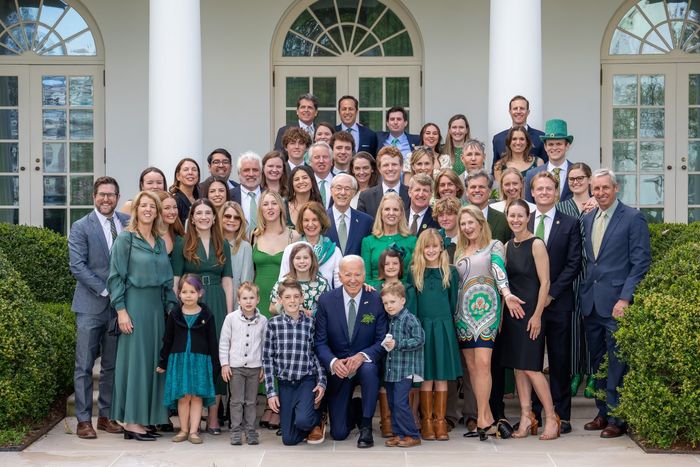
Members of the Kennedy family showed their support for Joe Biden at the White House’s 2024 St. Patrick’s Day festivities.
Photo: Kerry Kennedy/X
One reason the Kennedy family was able to command such influence over American politics for so long was that everyone stuck together. Joseph P. Kennedy, who was one of the richest men in the early 20th century, told his nine children not to worry about growing the family fortune and to use it instead to win elected office — the higher the better. After JFK won the presidential election in 1960, he brought along his brother Bobby as attorney general, installed his brother-in-law Sargent Shriver as head of the Peace Corps, and helped his brother Ted get elected to the Senate seat he’d just vacated. Shriver married into the family through Eunice, who went on to found the Special Olympics, and continually pressured Ted to make disability rights a core part of his decadeslong effort to revamp America’s health-care system. Kennedy siblings and cousins made calls and knocked on doors whenever one of them ran for state senate or lieutenant governor or the House. There were so many Kennedys running for office in 1994 alone that a campaign button read simply: VOTE FOR THE KENNEDY NEAREST YOU! When tragedy struck or scandal engulfed one Kennedy or another, as it often did, the family circled the wagons; they didn’t always get through unscathed, but they did get through as a team. In 2008, Caroline Kennedy, JFK’s daughter, published a New York Times op-ed with the headline “A President Like My Father” and joined her uncle Ted onstage to endorse Barack Obama over Hillary Clinton, which helped seal the nomination for Obama while connecting a new generation of Kennedys to the most hopeful moment in Democratic politics since the one Caroline’s parents had personified.
Despite having built his own constituency of vaccine skeptics, Bobby knew that his candidacy depended on his name. He launched his campaign in Boston, even though his family grew up in Virginia, and wore tight oxfords and skinny ties just like his dad — his ruddy face and bulging biceps making it a warped homage, as if his father had lived into his 70s and spent hours listening to Joe Rogan at the gym. Bobby tried to claim that his family was “probably evenly divided” between “those who support me and those who are less supportive,” but Anthony Shriver was the only one of his 23 first cousins and siblings who publicly endorsed him. Any goodwill that lingered was used up when a group affiliated with Bobby aired a Super Bowl commercial that was a shot-for-shot remix of an ad from JFK’s 1960 presidential campaign. It was already galling for him to claim his father’s legacy as part of his quixotic campaign but even more so to claim his uncle’s.
What’s humbling for all the other Kennedys is that none of their efforts to stop Bobby worked. They confronted him in texts, on family Zooms, and when they saw him in Hyannis. They published op-eds with headlines like “Ignore My Brother Bobby.” They appeared on MSNBC and CNN; they tweeted and Instagrammed. With two dozen living members in the so-called third generation, or G3, of the family — Bobby’s siblings and cousins — and 75 kids in the generation after that, it was also all but impossible to cobble together a single statement condemning their relative that everyone would sign off on. The closest they came to a collective response was in March 2024, when a few dozen Kennedys showed up for a St. Patrick’s Day photo op at the White House. Six of Bobby’s eight siblings got onstage with Biden a few weeks later to declare their support for him over their brother. “When you have seven or eight people trying to figure out a statement about their brother, it’s not easy,” Stephen Smith Jr., whose mother, Jean, was JFK’s sister and Bill Clinton’s ambassador to Ireland, told me. “The St. Patrick’s thing emerged as the easiest way to make a statement.” When Bobby endorsed Trump, several of his siblings put out another statement calling it “a sad ending to a sad story,” but no one had much hope of swaying him anymore. After a friend asked one of Bobby’s siblings what the family was doing to stop their brother, the sibling relayed a riff on a quote from Nelson Mandela, who had admired the Kennedys: “It’s easier to change the world than to change a relative.”
The truth is that Joseph P. Kennedy’s vision of a family united in purpose had long since given way to demographic reality. All of the Kennedys I spoke to, as well as many of their friends, told me there wasn’t much use in trying to understand today’s Kennedys as a family in any traditional sense. Joseph and Rose had nine children, six of whom lived to have kids of their own: John, Robert, and Ted Kennedy and Eunice Shriver, Patricia Lawford, and Jean Smith. Each of those clans has spawned its own family tree, and there are now more than a hundred living Kennedys plus spouses. “There is no ‘family’ — it’s not The Godfather,” Jack Schlossberg, JFK’s grandson, told me. “We don’t all meet every year and have a discussion about what to do. It’s just a bunch of individual people.” A person who has worked with numerous Kennedys over the years described them as more of a “holding company” than a biological family. “There are all kinds of subsidiaries that are oftentimes at odds with each other and competing with each other — and then there are some links,” they said. “If I heard from the Smiths on something, it didn’t necessarily mean that’s what Ted’s family would think. They don’t really communicate in the way you think they would. They’re not emailing everyone together over everything. It’s not because they’re dysfunctional — it’s just because they’re big.” No one can invite every Kennedy to their wedding anymore; if they did, they wouldn’t have room for anyone else.
The cohesion started to dissolve in earnest just a year after the Kennedys helped tip the 2008 election for Obama — in hindsight, their last moment of collective political power. In 2009, Caroline was the front-runner to succeed Hillary Clinton as New York’s junior senator, but she proved to be such a clumsy politician that her candidacy flamed out. A few months later, Ted died. In addition to his nearly five decades in the Senate, Ted had served as a father figure to more than a dozen nieces and nephews who lost their fathers to assassinations. He planned family trips to Valley Forge and Bunker Hill to reinforce a sense of togetherness while reminding the kids that they had a higher purpose than most families. “Teddy was the central operating principle of their lives,” a person close to several different Kennedy branches told me. “Not just the keeper of the flame but the person who fixed the problems — the person none of them would say ‘no’ to.”
No one in G3 could fill Ted’s role in the family, but Stephen Smith Jr. has worked as hard as any Kennedy to maintain connections among the six families. (His father had previously handled much of the behind-the-scenes Kennedy family business.) In May, I met Smith, who is 67, at his apartment in Cambridge, which is modest by the standards of American royalty but doubles as a family museum. The walls are decorated with Kennedy paraphernalia: the 1963 White House Christmas card sent out just before JFK’s assassination, a painting of Ted by Andy Warhol, a photo of Smith himself standing with Obama. When we met, Smith had just been texting with his cousin Kerry Kennedy, Bobby’s sister, who runs the nonprofit RFK Human Rights, about a trip she had taken to El Salvador to check in on migrants the Trump administration had deported. Pretty much every member of G3 had tried to make a career for themselves in public service; Smith told me he was now working on an initiative to see how AI could be used constructively in politics. “Working on that is my particular way of dealing with my anger and sense of betrayal about what’s happening in the country,” Smith said.
Smith had denounced Bobby during the campaign, and while he didn’t relish attacking his cousin, he felt an obligation to do so. “Knowing how Bobby is, and what he’s standing for, and then the misrepresentation and manipulation of the family legacy, which is dishonest and hurtful — it’s not a difficult choice for me,” Smith said. But he also understood the hesitation to attack a relative: “Everyone went through a lot together, particularly the RFKs, so there is this tension, which is the epitome of a tragic conflict, between the loyalty to the family and the loyalty to the values the family stands for.” He said that he had grown closer to some of his cousins as they tried to think through, How do we handle this?
Even as the Kennedys made clear their opposition to Bobby’s politics, he was never fully ostracized. During the campaign against Biden, a Vanity Fair reporter was surprised to find Maria, Tim, and Mark Shriver pulling into Hyannisport on a boat with their cousin Bobby, returning from a trip to a seafood shack nearby. His siblings also steered clear of getting too personal in their attacks — they were pro-Biden and pro-Harris, they insisted, not anti-Bobby. Several Kennedys told me they had worried about affecting their relationship with Bobby’s six kids. “Just because their dad does things we disagree with doesn’t mean those kids don’t deserve to have relationships with their cousins,” one said. “They’re going through a lot that is complicated, and my family understands that when you go through a lot that’s complicated, the one thing you should be able to count on is your family.” While there were whispers that some of Bobby’s children were troubled by his antics, both of his daughters, Kick and Kyra, later showed up to his swearing-in.
The Biden-Harris campaign had a team dedicated to combating Bobby, and part of the strategy rested on letting the public know that his family wasn’t on his side. But multiple campaign staffers told me they were frustrated by the Kennedys’ desire to pull some of the more devastating personal punches they could have thrown. “They seemed extremely concerned with protecting and promoting the family brand without realizing that the biggest threat to the family brand was this nut-bag brother-slash-cousin,” one staffer said. Some in the family seemed to even hold out hope that they could bring him back into the fold: As Bobby weighed whether or not to endorse Trump, he reached out to his cousin Maria Shriver to ask if she could broker a meeting with the Harris campaign. Shriver encouraged the campaign to meet with Bobby, but the campaign declined.
Even after Trump won, with Bobby’s help, no one was looking to cut him out. “I don’t think you heard anyone say that Bobby was a bad human being. I don’t think you heard anyone say that Bobby should be treated with contempt. If he moves to Washington, are you inviting him over to your house? Absolutely,” Tim Shriver, his cousin, said on MSNBC. “I’m not giving away my family to politics.” When some of the family went on a ski trip in Aspen that winter, Bobby was there.
One branch of the family was more willing than the others to cast him out. While JFK and RFK had been close, their families drifted apart after their deaths. Jackie Kennedy tried to create a more private life, moving to New York and buying a home on Martha’s Vineyard, which put the Nantucket Sound between her children and Ethel’s more rambunctious brood in Hyannis. (Stephen Smith told me his father also had eventually decided to stop vacationing there.) Before his death in a plane crash, Jackie’s son, John Jr., tried to stay close to some of his cousins, including Bobby Jr. They had both failed the bar exam before working for the Manhattan district attorney’s office and shared a friendly rivalry as the literal namesakes of their family’s most famous members. “Can you believe it?” Bobby asked his assistant when People named John its Sexiest Man Alive in 1988. (“Yes, I can,” she said.) When this magazine published a cover story about Bobby in 1995 alongside the headline “The Kennedy Who Matters,” John asked his assistant, “To who?” When John died, he left Bobby $250,000 in his will.
While John Jr.’s sister, Caroline, was close to some of her cousins, including Maria Shriver and Sydney Lawford, she had kept some distance from the broader clan. “JFK’s family is in a different tier than Bobby’s kids, who are on a different tier from everyone else,” a Democratic strategist who has worked with the family told me. (It did not go unnoticed that Caroline had attended only one of Ethel’s two funeral ceremonies.) Caroline, like many of the Kennedys I reached out to, declined to speak with me for this story, but she did send an email echoing the warning I had received about trying to analyze the family as a cohesive unit. “Just to state the obvious though it seems often underweighted these days — there are now more than 100 adults in our family so it’s pretty different than in the past,” she wrote.
Caroline did not comment on her cousin during the campaign out of deference to her role as the Biden administration’s ambassador to Australia. But she posted a brutal video statement from her apartment on Park Avenue the day before Bobby’s January confirmation hearing to become HHS secretary. Caroline started off by calling her cousin “unqualified” for the job with “dangerous and willfully misinformed” views on vaccines and a lack of “any relevant government, financial, management, or medical experience.” Then she got personal. “It’s no surprise that he keeps birds of prey as pets, because Bobby himself is a predator,” Caroline said. She described Bobby putting baby chickens and mice in blenders to feed his pet hawks as a young man and accused him of encouraging his siblings and cousins down the path of drug addiction. “Bobby has gone on to misrepresent, lie, and cheat his way through life,” she said, adding that his decision “to grandstand off my father’s assassination, and that of his own father,” had made the decision to speak out even easier. “Unlike Bobby, I try not to speak for my father,” Caroline said. “But I am certain that he and my Uncle Bobby, who gave their lives in public service to our country, and my Uncle Teddy, who devoted his long Senate career to the cause of improving health care, would be disgusted.”
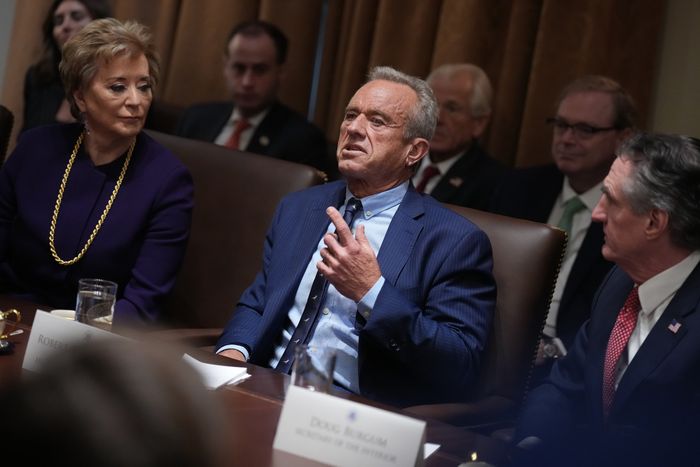
At a Trump Cabinet meeting in February, RFK Jr. called the Texas measles outbreak “not unusual.”
Photo: Andrew Harnik/Getty Images
The first public promise Donald Trump made to Bobby Kennedy was to help him upset his family. The conventional narrative around the assassinations of RFK and JFK is that they represented the ultimate, terrible sacrifice of public servants who believed so strongly in America and its government that they were willing to give everything for it. Bobby’s theory of the killings takes the opposite view: that the American government is evil. He has called evidence that the CIA killed his uncle “overwhelming” and, in his father’s case, “circumstantial but very, very, very persuasive.” Over the objections of his mother and most of his siblings, Bobby has argued that his father’s convicted killer, Sirhan Sirhan, should be paroled. When Bobby officially endorsed Trump last year, walking onstage to “My Hero,” by Foo Fighters, Trump vowed to release every file related to the assassinations, including bloody autopsy photos of Bobby’s father. “This is a tribute in honor of Bobby,” Trump said, before invoking JFK and RFK. “I know they are looking down right now, and they are very, very proud of Bobby.”
Unlike with the Epstein files, Trump showed no delay, ordering the release of the documents on his third day in office. There was no smoking gun, but there was a letter Bobby had sent to Eric Holder, Obama’s attorney general, asking him to reopen the investigation into his father’s death way back in 2012, shortly after Bobby was diagnosed as having a worm in his brain. Bobby argued that the public interest in transparency outweighed any grief his siblings might feel at seeing photographs of their father’s mangled body. After director of national intelligence Tulsi Gabbard said she was releasing the files with “Bobby Kennedy and his families’ support,” Kerry Kennedy tagged her brother on X and objected to the suggestion that she had signed off on the decision. When Kerry and other Kennedys visited RFK’s grave in Arlington National Cemetery on the anniversary of his killing, Bobby wasn’t there.
Of the RFK clan, Kerry has offered the most vocal public dissent against her brother’s rightward turn, despite the fact that they had been close since they were children. Bobby’s second wife was Kerry’s best friend, and Kerry and her ex-husband, Andrew Cuomo, lived near Bobby in Westchester for years. Her brother’s rise has especially complicated Kerry’s job running RFK Human Rights, the nonprofit named for her father but easily confused with her brother. “Kerry feels a special burden with his candidacy,” their brother Chris Kennedy said last year. “Her abilities would be diminished if the Kennedy name is associated with fringe thinking, crackpot ideas, and unsound judgment.” RFK Human Rights still has a post pinned to its Instagram account declaring that it is “not affiliated” with Bobby, and Kerry denounced her brother after his endorsement of Trump: “I completely disavow and separate and dissociate myself from Robert Kennedy Jr. and his flagrant and inexplicable effort to desecrate and trample and set fire to my father’s memory.”
Once Bobby was confirmed as HHS secretary, each of the G3 Kennedys had to shift into doing what they could to protect the causes they supported — their subsidiaries within the holding company. For Kerry, that meant defending against the Trump administration’s assault on human rights: She has publicly criticized its attacks on transgender people, the press, immigrants, and DEI initiatives. (In February, she also posted a photo of a dozen eggs being sold for $16.89 at a grocery store near her daughter’s apartment in Brooklyn.) When the Trump administration announced that it would end legal aid for migrant children, she texted her brother to make the case against the proposal. “My job is to deal with a brother whose mind is not going to change, and who is now secretary of HHS, and try and get him to do things, even if only on the margins, that advance justice,” she said earlier this year. In May, during an RFK Human Rights party at a Tulum-inspired restaurant in Williamsburg, Kerry boasted about the 17 different lawsuits her organization had filed against the administration and posed for a photo with her bichon frise next to a poster of her father that had a cheeky caption: YOU CAN’T BEAT THE ORIGINAL.
Other Kennedys have stepped up to defend their own causes. After Bobby said that autistic kids would never play baseball, his cousin Tim, who runs the Special Olympics, objected in a letter co-signed by Anthony Shriver, the only cousin who had previously supported Bobby and who runs an organization that works with mentally disabled people. When the Women’s Health Initiative seemed to be under threat from DOGE, Maria Shriver spoke to Bobby and said she got assurances it would be spared.
But the Trump administration’s assault on the family legacy has been too broad to combat completely. “I think pretty much everybody feels that Donald Trump is a betrayal of everything our family stands for — internationalism, investment in science, belief in a free press, a global rules-based order standing up against totalitarianism,” Stephen Smith said. There were cuts at the JFK Library and threats to sell off federal buildings named after JFK and RFK. Even the Rose Garden, made into a symbol of elegance when John and Jackie Kennedy were in the White House, was paved over. The John F. Kennedy Center for the Performing Arts, which doubles as Washington’s monument to the former president, has come under the most persistent attack. Trump removed much of its board and was installed as chairman, laid off staff, and began stamping out any whiff of progressive programming. In July, a Republican lawmaker introduced a bill to remove JFK’s name from the center and replace it with Trump’s, alongside another proposal to name the opera house after Melania. (In August, Trump floated the idea of calling it the “Trump Kennedy Center.”) “This is insane. It makes my blood boil,” Maria Shriver wrote on X. “‘Let’s get rid of the Rose Garden. Let’s rename the Kennedy Center.’ What’s next?” When Trump went to the center in June for a performance of Les Misérables, Bobby was the only Kennedy in attendance.
Even more demoralizing has been the hollowing out of institutions the Kennedys have built and supported for decades — the Peace Corps, USAID, and Head Start, among others. But with Bobby the only one in a real position of power, the Kennedys didn’t seem able to do much except lament the situation. In April, Kerry published a riff on Martin Niemöller’s famous poem, “First They Came,” to express her angst about Trump’s unending stream of attacks on the government, including USAID and the U.S. Institute of Peace, where she is a board member:
First they came for USAID & USIP
And I did not speak out
Because I was not part of USAID or USIP
The fact that Bobby was working to reshape America’s health system, of all things, was especially hard to stomach. John F. Kennedy had signed the Vaccination Assistance Act, which ensured access to immunizations against diseases like polio, and Ted Kennedy devoted much of his Senate career to health care, up through the Affordable Care Act, which passed months after his death. “He is undermining everything his uncle worked on for many years,” Jim Manley, who spent 11 years assisting Ted in the Senate, told me this spring. “Do you have any idea how much time he spent protecting the CDC and NIH? How hard he worked to provide health care for all Americans? This guy is trying to destroy everything — I’m so mad I can’t even think about it straight.”
In addition to endorsing cuts to Medicaid, Bobby has taken aim at the Eunice Kennedy Shriver National Institute of Child Health and Human Development and laid off staffers at the CDC who coordinated a partnership with the Special Olympics. While visiting a conference of Native American tribes earlier this year, Bobby promised to continue his father’s commitment to improving the lives of Native Americans — only for the Trump administration to cut a USDA program focused on providing healthy food on reservations. Manley gave credit to Caroline for speaking out forcefully but was upset by the relative quiet from the other Kennedys. “It’s been virtual radio silence,” Manley said. “He’s just dumping all over their legacy, and I don’t see any of them doing anything.”
But the Kennedys have little sway over Bobby’s MAHA movement — in fact, their criticism has only fueled a sense from his supporters that he is fighting the powers that be. “I don’t think me teeing off on President Trump, or Bobby, is gonna get them to decide not to cut a trillion dollars out of Medicaid,” one Kennedy told me. The most surprising response has come from Patrick Kennedy, Ted’s son, who spent 16 years in Congress as a representative from Rhode Island. Patrick struggled with alcohol and drug addiction all his adult life, and since leaving the House in 2011, he has focused his career on the issue. In 2023, he became a consultant and lobbyist working on mental health — the first Kennedy to officially register as a lobbyist. Patrick had joined the rest of his family in criticizing his cousin’s campaign, but on the same day Caroline posted her scathing video, Patrick broke ranks and expressed his support for Bobby’s nomination as HHS secretary. Both Bobby and Patrick had been through recovery, and Bobby had been one of the first Kennedys to support Patrick after he published a memoir that included some unflattering details about his family, like a failed intervention Patrick and his siblings had with their father about his drinking. Patrick’s gamble was that even if his cousin destroyed America’s faith in vaccines, he might be a force for good on mental health. “We lost,” Patrick said after the election. “I can’t go away for four years, and this movement can’t go away for four years.”
In addition to anger, a persistent sadness has lingered over the G3 Kennedys. They had survived for so long under the microscope, supporting one another through highs and lows, only to now be broken apart. Earlier this year, Maria Shriver, who has lived one of the more public lives among the G3 Kennedys as a television journalist and the former wife of Arnold Schwarzenegger, published a collection of poetry titled I Am Maria that grapples with the pressures of being a Kennedy: “I’m not here to run for office or be compared to ghosts / I’m not here to walk the miles hoping you’ll deem me enough.” During her publicity tour, Maria appeared on a podcast hosted by her brother Tim, who said he regretted that “our siblings and cousins have been trapped a little bit in communicating through social media” and wondered if a different strategy might work. “I know this is gonna sound ridiculous, but maybe we should all write a poem to each other,” Tim said. Maria ran with the prompt, composing a new poem to Bobby on the spot:
My heart breaks that you and I are at odds.
I’m bereft that you and I have come to this place.
I’m heartbroken that there is a potential future where you and I are not in each other’s lives. Where our children are not connected.
That cannot be.
We have got to find our way home.
You and I cannot be in this place that we find ourselves in.
Do we even know why we are here?
Do you know?
Do I know?
How do we find our way through the heartbreak, through the healing, back to our home?
Are you mad at me?
Are you sad with me?
Do you feel that I cut you down?
What is it that you don’t understand about my words that I used?
Because I don’t understand yours, but I don’t want to lose you over words.
I want to be with you as I age, as I grow.
I want you to be with me.
Can we find our way home?
Do you understand that I’m heartbroken, that I’m crying for a return to something that maybe never was, but can be for our future?
Come on, let’s figure this out.
Let’s find our way home.

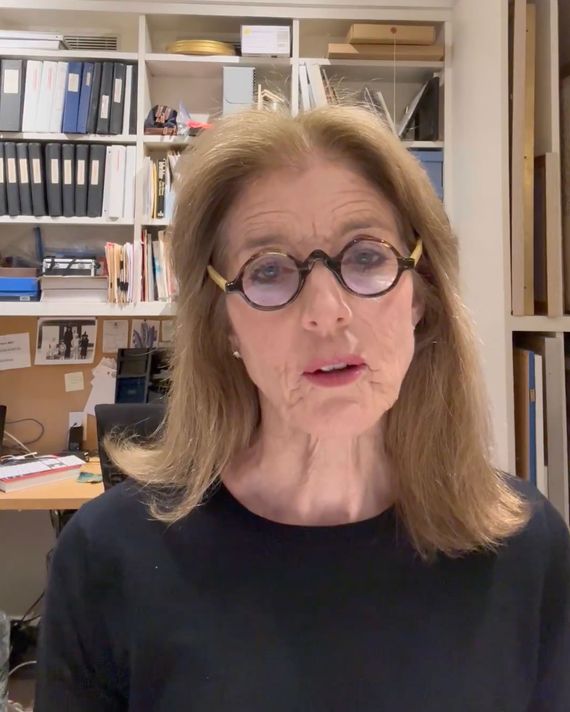
In January, Caroline Kennedy implored the Senate to reject her “predator” cousin as HHS secretary.
Photo: Jack Schlossberg/X
The Kennedys now live all over — in Boston, of course, as well as New York and D.C. But they’re also in Chicago, Miami, Los Angeles, San Francisco, and Milan. If there is a shared home for the family to find its way back to, it’s Hyannisport. Marine One is no longer landing on the lawn in front of Nantucket Sound, but many Kennedys still have homes there. Bobby has a six-bedroom white Colonial next to his cousin Teddy Jr., who lives in JFK’s old house, which is next to Ethel’s old home, which her son Max now owns. Bobby has to walk through his cousin Patrick’s yard to get to the beach. Tim, Mark, and Anthony Shriver all have houses nearby, as does Kerry Kennedy. She moved to Hyannis to take care of her mother and bought a home with a lawn for pickup football games and built a retaining wall with the same pink granite that Jackie used at JFK’s grave site at Arlington National Cemetery.
For decades, Hyannis was a place where the business of being a Kennedy was conducted. This sometimes made it a not-so-relaxed place to be a kid. “Visiting Hyannisport used to trigger me,” Maria Shriver wrote in her new book. “As soon as I’d land, I could feel my body tense up.” One G3 family member described the daily routine: Everyone’s work, from meetings with foreign leaders to pet causes, was discussed over breakfast, then calls were made to set things in motion before a midday sail or game of tennis, after which everyone came back in the afternoon to follow up on whatever the phone calls had produced. But with less family business to attend to anymore, the vibe has become less hectic. A few years back, a G3 Kennedy was in Hyannis, making calls as usual, when his nephew sat down next to him. The G3-er asked his nephew if he felt like he could actually be on vacation in Hyannis.
“Oh yeah, this is the greatest vacation spot ever,” the nephew said. “Don’t you?”
“I’ve never felt for one day like I was on vacation here,” the G3-er said.
While the G3 Kennedys were all raised to believe they could — and perhaps should — become president, most of them didn’t want to apply the same pressure to their children. Among the 75 living members of G4, there is a wide range of lifestyles and careers. There’s a firefighter, a hairstylist, and a Reiki instructor — that’s one of Andrew Cuomo’s daughters — as well as a yoga teacher and a somatic and integrative psychotherapist. They’re in the physics department at Princeton and work as interior designers in Charleston, South Carolina. They have jobs in private equity and growth equity and as a headhunter focused on diversity, equity, and inclusion. There’s a doctor in Manhattan, a family lawyer in Oakland, and a spokesperson for an organization trying to figure out what’s wrong with American men. They’ve held corporate jobs at Uber and WeWork and Bank of America — Ted Kennedy III is a management consultant at Accenture — and pretty much all of them now find it necessary to have profiles on LinkedIn, where one Kennedy describes himself as a software engineer with “experience building full-stack big-data applications and enterprise blockchain solutions.” One of the Shrivers was in Scotland this summer directing a play at the Edinburgh Fringe called The Horniest Girls in New York City, and Patrick Schwarzenegger, Maria Shriver’s son, went full frontal earlier this year while playing the scion of a rich family on The White Lotus. As for the ones in school, Kennedys still go to Harvard, but they also rush sororities at UC Boulder.
G4 has occasionally made tabloid headlines: Bobby’s daughter Kyra was a member of the so-called Snap Pack in the 2010s, alongside Gaïa Matisse and Tiffany Trump, and the New York Post once reported that she told a bouncer who denied her entry to a nightclub, “I’m a Kennedy. Google me.” (She’s now a model and influencer in Milan.) They have also been romantically attached to Ben Affleck, Miley Cyrus, and Taylor Swift, who wrote a song about Ethel and RFK Sr. while dating their grandson Conor. But most of G4 ends up marrying editors at Simon & Schuster or the owners of car dealerships in Miami and setting up wedding registries at West Elm. They have also had the misfortune of continuing the family’s history of tragedy: One G4 Kennedy member died of an overdose in college, and another died in a canoeing accident along with her 8-year-old son.
For the fourth generation of Kennedys, as for most Americans, the Kennedy legacy is largely a story from history books rather than a daily imperative. But plenty of them have devoted themselves to the kinds of causes their family has supported for years, albeit with a modern twist: One G4 Kennedy runs venture-capital funds focused on helping people with disabilities. In 2022, Bobby’s son Conor skipped out on a summer internship during his time at Georgetown Law and instead signed up for Ukraine’s International Legion, a regiment of foreign volunteers, and spent several months serving as a drone operator and machine gunner. (He now works for a firm that specializes in mass tort legislation.) Even though the phones aren’t always ringing in Hyannis anymore, one of Bobby’s college-age nieces recently put on a “Peace at the Post Office” event there, inviting locals to write letters to elected officials. A few of her cousins showed up to help.
When I talked to Kerry Meltzer this summer, she was grappling with how to be a G4 Kennedy who cared about upholding the family’s legacy but didn’t have access to the same levers of power her parents and grandparents did. Meltzer, whose mother is Bobby’s sister Kathleen Kennedy Townsend, the former lieutenant governor of Maryland, told me she has little interest in going into politics but was inspired by Ted Kennedy to become a physician. She now works as a primary-care doctor at NYC Health + Hospitals, which has made her uncle’s attack on America’s health-care system all the more personal. Meltzer published a New York Times op-ed in 2020 pushing back on his anti-vaccine positions and leaked emails from her uncle to the medical-news site STAT News to highlight Bobby’s fringe views in an effort to derail his confirmation as HHS secretary. Now, Meltzer told me she worried about what Bobby was doing to the family’s legacy pretty much every day but wasn’t sure what she could do to stop him. “What’s the point of me writing another op-ed in the New York Times at this point? You’re talking to an echo chamber,” Meltzer said. She had decided to focus her energy on caring for immigrant patients who were now afraid that ICE would show up to their hospital room or the patients on Medicaid who may not have coverage for much longer.
Another reality for most of the G4 Kennedys is that, unlike their parents, they have to make a living. The Kennedys were among America’s wealthiest families in the first half of the 20th century, and in 1969 Time estimated that they were worth a collective $400 million. But almost all of G2 and G3 had dedicated themselves to public service of some kind rather than growing the family business, which was largely tied up in real estate: some in Manhattan but more in Texas and Florida and Chicago. By the mid-1990s, the Kennedys had dropped off the Forbes list of America’s richest families, and in 2014 the magazine pegged the Kennedy fortune at $1 billion, which sounds hefty but meant that it had just kept up with inflation.
It also has trickled down unevenly. When Joseph Kennedy died in 1969, the family fortune was split equally among his children, who were building families of different sizes. JFK and Jackie had only two children, one of whom died before having kids. (Jackie also received a significant inheritance from her second husband, Aristotle Onassis.) In 2013, when their daughter, Caroline, became Obama’s ambassador to Japan, the Post analyzed her filings and estimated her net worth at more than $250 million. RFK and Ethel, meanwhile, had 11 children. He died with $3 million in campaign debt, which had to be paid off, and Ethel, who never remarried, had a reputation for spending more money than she should. In Bobby’s divorce proceedings from 2012, he claimed that his mother was broke and that he and her other children had been covering her expenses. Bobby himself had to depend on wealthy benefactors from his environmental work who got him a house in Hyannis that he was only able to buy outright in 2020, after his anti-vaccine crusading had taken off. (Between 2016 and 2022, Bobby’s annual salary from Children’s Health Defense, his anti-vaccine organization, increased from $0 to $510,515.) Bobby’s current net worth has been estimated at $15 million — plenty rich, but a sliver of Caroline’s net worth. All of that leaves the 34 members of the G4 generation in the RFK branch in a much different situation from Caroline’s three children. “By the time you get to the fourth generation, the money’s run out,” Maeve McKean, one of RFK and Ethel’s grandkids, said back in 2008. Maeve had worked her way through Boston College with a job at Dunkin’ Donuts and was leaving law school with $150,000 in student debt.
What almost none of the G4 Kennedys have spent their money on, as their forebears did, is getting into politics. While three of the adult men in G2 became senators (the fourth died in World War II) and half of the men in G3 ran for office of some kind — Kathleen Kennedy Townsend is the only Kennedy woman to ever win elected office — just one member of G4 has run for anything. Joe Kennedy III, who is Bobby’s nephew, followed a classic Kennedy path: the Peace Corps, which JFK created; Harvard Law; a stint as an assistant district attorney, like his uncle Bobby; all before winning a seat in Congress from Massachusetts in 2012. He was smart and well liked and did his best to make use of the family name without taking advantage of it while dealing with the attendant complications. Once, Bobby had asked Joe to meet with a group of anti-vaccine activists. “We had the meeting out of courtesy,” one of Joe’s former advisers told me. “But these people were so far out of the mainstream that Joe called his uncle right after and said he wasn’t gonna do that again.” In 2017, Town & Country published a profile of Joe under the headline “Meet the Next President Kennedy,” and a year later he delivered the Democratic response to Trump’s State of the Union. In 2020, he challenged sitting Democratic senator Ed Markey, a bold move that got people dreaming: A new Senator Kennedy would immediately be on a short list of presidential candidates in 2024, when Joe would turn 44 — roughly the same age his uncle and father had been when they ran for the Oval Office.
But Joe’s campaign was a disaster. He entered the race with a 14-point lead based on the strength of his name, but Markey successfully positioned himself as the progressive while painting Joe as an out-of-touch rich kid. Joe became the first Kennedy to lose an election in Massachusetts. For just the second time since 1947, there were no Kennedys in Congress, and the defeat crystallized what was becoming obvious: The number of voters with a connection to the Kennedy dynasty was dwindling. “The all-powerful nature of it had moved on,” one of Joe’s advisers said. “That’s got to be startling to other members of the family who have worked so hard to maintain the legacy of RFK or JFK.”
Almost everyone in and around the family believes that Joe still has a political future, if he wants one. Joe declined to be interviewed for this story but has said that he wouldn’t rule out another run for office. “He was really crushed by the Senate campaign,” a Democratic strategist who has worked in Massachusetts politics told me. “But I think there’s also an awareness of ‘I’m the only Kennedy who could run for office and still win, and air-quotations Camelot needs someone to keep that door open.’”

Jack Schlossberg has started filming a YouTube show, Test Drive, out of a conversion van.
Photo: Jack Schlossberg via YouTube
Earlier this year, Patrick Schwarzenegger invoked his maternal Kennedy family several times on the press tour for The White Lotus. He told CBS that “it was instilled in us to find ways to give back at an early age” and that Mike White had complained early in production that he wasn’t walking like a rich person. “Aren’t you a Kennedy?” White said. During an interview with InStyle magazine, Schwarzenegger even showed off a photo his mother had given him of JFK, his granduncle, after Richard Nixon’s concession in the 1960 election.
“Cool photo, bro,” Jack Schlossberg, Schwarzenegger’s second cousin, wrote in a comment on Schwarzenegger’s Instagram account. “Since you’re using JFK’s name for clout, do you, uh … also support RFK Jr. for Health and Human Services Secretary? You can’t have it both ways!!” Schlossberg was in the middle of waging a relentless campaign to pressure more members of his extended family to be more outspoken about Bobby’s nomination as HHS secretary. “This is for the rest of my cousins,” he said on Instagram the week of Bobby’s confirmation hearing. “I’m asking the media to ask my cousins — I have a lot of ’em — what they think and why they don’t say anything … How come I’m the only one who’s talking out?” Schwarzenegger texted Schlossberg to talk one-on-one, but Schlossberg wasn’t interested. “I don’t want you to talk to me I want you to stand up for what’s right in public for the world to see,” he wrote in reply. “Take my grandparents name out of your mouth if [you] can’t distance yourself from a blatant racist anti semite white nationalist henchman RFKjr.”
Schlossberg, who is 32 and lives in Manhattan, has existed for most of his life on the edges of American political consciousness: the only male heir to JFK with a swoop of dark hair like his uncle John Jr. and a seemingly sincere interest in politics. He graduated from Yale, then got a dual J.D.-M.B.A. at Harvard and passed the bar, marching along a Kennedyesque path, before his cousin Bobby’s candidacy prompted him to pivot. After posting an Instagram video calling out his uncle’s campaign as a “vanity project” that was “trading in on Camelot, celebrity, conspiracy theories, and conflict for personal gain and fame,” Schlossberg went viral sharing clips of himself taking ballet classes or riding a hoverboard while reciting verses by Lord Byron. A kooky, progressive heartthrob was born. Schlossberg landed a gig making videos about the presidential campaign for Vogue and tried working as a surrogate for the Biden-Harris campaign, but the arrangement proved restrictive. “He very openly was like, ‘I want to remain authentic, and I won’t take talking points,’” one campaign staffer told me.
“We had different ideas on what would be effective,” Schlossberg told me when we spoke earlier this month. He was in Martha’s Vineyard with his family but wasn’t taking an August hiatus from posting. “All gas, no brakes,” he said. He was still worked up that other members of his extended family were, in his view, being too quiet. “I honestly don’t know how, if you grew up in our family, and you listened to everything that came out of that generation, how you could possibly not spend all of your waking hours — like I am — figuring out how to speak out.”
Since the election, Schlossberg’s persona has taken a more aggressive and sometimes vulgar turn. He shaved his head and swapped out the ballet clips for 69 jokes and shirtless videos of himself dancing in front of a mirror in his messy bedroom. The effect was suddenly more late-stage Justin Bieber than Camelot. He has called his cousin Bobby a “lying sack of shit” and challenged him to a fistfight “until one of us has autism.” Schlossberg has been equally merciless toward Bobby’s wife. “Hi Cheryl Hines, it’s Jack; we’ve never met,” Schlossberg said. “I just wanted to ask if you could call the family of the person who died of measles. I think you should have to do that … I don’t think Bobby’s gonna do it … can you do that for me, babe?” His family hasn’t been the only target. To take only what he has said about J. D. Vance and his wife, Usha, as a representative example: Schlossberg has questioned whether Vance has a penis or nipples; asked his readers “True or false: Usha Vance is way hotter than Jackie O,” referring to his grandmother; and said that he was expecting a child with Usha.
When I spoke to other Kennedys and their friends about Schlossberg, they all thought he was smart and hardworking, but they had no idea what he was trying to do. “I’ve told Jack that what he’s doing is a mistake,” a G3 cousin said. “But it is not my business to tell him how to run his life.” After his spat with Schwarzenegger, Schlossberg took a break from social media, during which his second cousin Kick, Bobby’s daughter, told the Post, “I hope he gets the help he needs.”
When we spoke, Schlossberg insisted that he was in control. “It’s not me,” he said of his online persona. “It’s a character based on an algorithm controlled by giant companies. I can talk all I want about something super-serious, and I’ll show you the numbers — it doesn’t work.” Schlossberg insisted that his gonzo posting had a purpose and that he hoped people who were tuning in to see JFK’s grandson be weird online would stick around to hear his political commentary. He told me he now gets stopped all the time while walking around New York. “They’re not saying, ‘Oh my God, you’re so hot,’” he said. “People are coming up and cheering me on, telling me they love me, thanking me for what I’m doing — saying that it takes real courage.” But he also acknowledged that he has so far been more successful creating a brand for himself than in stopping any of the damage Trump, or his cousin Bobby, was inflicting.
Schlossberg has no plans to enter the family business of electoral politics anytime soon and blanched when I tried to compare his influencer advocacy to his second cousin Joe’s more traditional pursuit of office. “I wouldn’t call it a traditional path to run in a primary against a sitting senator when you have a chance to continue representing the people of Massachusetts,” Schlossberg said. In June, Schlossberg posted a video of himself imitating an imagined critique of his endorsement of Zohran Mamdani against his onetime family member Andrew Cuomo in the New York City mayoral primary. “Dude, Cuomo’s gonna be mad at you, brother … You don’t want your own cousins mad at you, bro,” Schlossberg said, before screaming into the camera, “I don’t give a fuck!” While a handful of Kennedys have donated to Andrew Cuomo’s mayoral campaign, including his ex-wife Kerry, who gave $500, none of them have given to Mamdani. (The only other Kennedy donation in the primary was $10 from Jack’s father, Ed Schlossberg, to Zellnor Myrie.)
In July, Schlossberg launched a YouTube show called Test Drive, in which he sits in the driver’s seat of his Chevy conversion van and gives a high-low mix of commentary on the news, from Trump’s tariffs to Sydney Sweeney’s jeans commercial. He had thus far taken the van to Massachusetts, Maine, and Canada and even slept in it when he wasn’t home in New York. He plans to head to the South after Labor Day, popping up in places affected by the Trump administration’s cuts or where Democrats might flip House seats in next year’s election. He also told me that, like a proper influencer, he would soon be launching his first product collaboration but would only share a few details. “It will retail for $69.99, I think,” Schlossberg said. “And you will be able to light it on fire.”
Earlier this summer, Schlossberg went live on Instagram from his family’s home in Martha’s Vineyard. He had just finished a cross-country road trip that took him out to Mt. Rushmore, during which he took Ryan Murphy to task for making a television show about his uncle without consulting his family. He opened up the floor to his parents for questions. His father asked why Jack liked water sports so much. “If you catch a wave, it’s not because you’re a Kennedy,” Schlossberg said. “It’s objective feedback, and it’s hard to get that from the world.”
The sentiment echoed the one his cousin Bobby had shared about his time riding the rails as a young man. In a sense, every Kennedy has felt the lure of not being a Kennedy at some point — of living their own life instead. Bobby has now taken that impulse to a Trumpian extreme, willingly abetting the destruction of what it means to be a Kennedy altogether. His pivot has left his family flailing in the effort to figure out how to put that shattered image back together.
In May, I went to Boston for the Profile in Courage Award ceremony at the JFK Presidential Library, an annual event named after the Pulitzer Prize–winning book JFK published about U.S. senators who paid a price for taking a political stand. Bobby happened to be in Boston, too — Cheryl Hines’s niece was wrapping up her career as a softball player at Boston College — but he wasn’t among the handful of Kennedys who were at the library to honor this year’s surprising winner: Mike Pence, for his unwillingness to endorse Trump’s attempt to overturn the 2020 election. One G3 Kennedy told me they saw Pence’s nomination as “a big ‘fuck you’ to Donald Trump” and described it as “a really courageous choice.”
Was it? Back in 2020, Pence had cited JFK’s book in an op-ed calling on Democrats to vote against impeaching Trump. “Who will be the 2020 Profile in Courage?” Pence wrote. At the time, Jack Schlossberg called Pence’s argument “a total perversion of JFK’s legacy and the meaning of courage” and said that Pence had “failed the test of courage” himself by aiding Trump’s rise to power. Giving the award to Pence now suggested that the standards for courage in American political life had fallen to a new low. In her speech at the event, Caroline Kennedy seemed to affirm how much her country has changed. “It’s hard to believe that attending a black-tie gala could be described as an act of courage,” she said. Her son Jack introduced Pence and later sat for an interview with him, during which he asked Pence what his favorite snack was. The Kennedys seemed to be hoping that embracing Pence would provoke some kind of response from Trump, but none came. The president and his henchman were too busy tearing apart the country their family had built.
link