


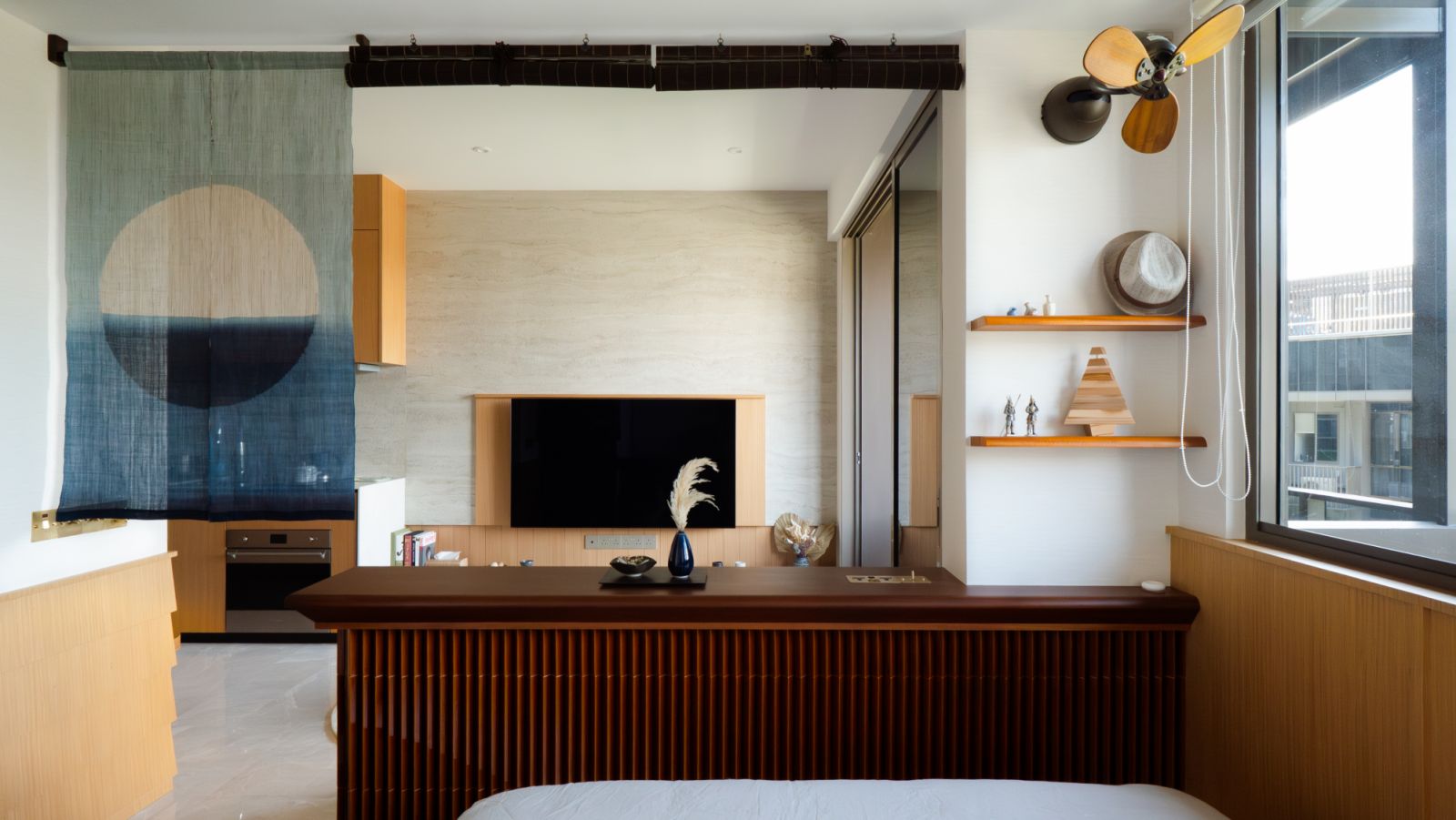
This residence by M.Interior demonstrates how the intersection of spatial choreography, tactile refinement, and lived experience can culminate in a home that feels both elevated and emotionally grounded
When Ray Kok stepped into this 474 sq ft apartment in Forett at Bukit Timah, he saw a space full of untapped potential. While the compact footprint came with its share of constraints, it also offered a valuable opportunity to challenge conventional spatial norms and refine his own design language. The chief creative director of M.Interior knew exactly what he wanted: a thoughtfully crafted space that feels larger than its actual size, seamlessly integrated storage solutions that do not compromise on openness, and flexible work and living zones that can adapt to evolving needs while still offering a sense of privacy.
Don’t miss: How family-owned firm Trace Design & Build is redefining residential design
Singular intent
A key guiding principle in the design of Kok’s first home was the creation of purposeful, fluid spaces within the compact one-bedroom unit, complete with a study nook. “Defined by multiplicity of purpose and intentional simplicity, the design favours spatial flow over ornamentation. Materials and interior styling serve not as the focal point, but as a complement—reinforcing continuity, enhancing transitions, and ensuring that every element exists to support the experience of the space,” shares M.Interior’s chief creative director.
Indeed, the abode functions as a singular, cohesive environment achieved through the smart rezoning of its layout. Drawing inspiration from tatami-style living, it reimagines how space is physically experienced—seating, movement and perception are designed to feel fluid and intimate.
Years of travelling to Japan with his partner and immersing themselves in its rich culture have shaped an appreciation for layered simplicity and restrained materiality. “Our experiences in onsen retreats and luxury hotels reinforced the idea that great design isn’t limited by scale, but by careful intent,” Kok reflects.
Small gestures deepen the personal resonance of the space. The half-height counter has become a favoured spot for evening wine and conversation; the study nook a quiet refuge for work. Thoughtful transitions between zones allow daily rituals—be it brewing coffee or sharing a meal—to unfold naturally.
In case you missed it: Architects reflect on the future of sustainable design at V-ZUG
link